A regional restaurant and entertainment group operating 9 locations across the Mid-Atlantic — 200+ employees, multiple point-of-sale environments, and high-volume nightly operations requiring around-the-clock reliability.

Locations unified under a single IT framework
PCI DSS-compliant network segmentation achieved
Staff IT issues resolved same-day — up from a 2–3 day average
UniFi next-gen wireless access points deployed across all 9 locations for seamless coverage
THE CHALLENGE
This group had grown from two flagship venues into a nine-location operation spanning restaurants, bars, and private event spaces. With that growth came compounding complexity: each location had been set up independently, with different vendors, inconsistent network configurations, and no centralized visibility into what was happening across their environment. Wireless coverage was a constant complaint — dead zones in dining rooms, dropped connections at POS terminals during peak hours, and guest Wi-Fi that loaded slowly enough to generate real customer friction.
Their most serious risk was one they didn’t fully see until we mapped it. Point-of-sale systems at every location processed thousands of credit card transactions each week — yet their networks were completely flat. Guest Wi-Fi, staff devices, POS terminals, and back-of-house systems all ran on the same network. A single compromised device — a server’s tablet, a lounge smart TV — could expose cardholder data across the entire operation. They had PCI obligations they weren’t meeting, and no documentation to prove otherwise. And because the wireless infrastructure was so inconsistent, properly segmenting those environments would require a full refresh, not a patch.
Physical security was equally fragmented. Aging cameras with inconsistent coverage left loading docks, cash handling areas, and private event spaces inadequately monitored. Staff reported recurring incidents of theft and unauthorized access, but footage was either missing or too low-resolution to be actionable. They needed a partner who understood the IT, wireless, and physical layers of a multi-site hospitality operation — and could bring all three together under one coherent strategy.
WHAT SOLVED IT DID
Network Segmentation, Wireless Infrastructure & PCI Compliance We designed and deployed a fully segmented VLAN architecture across all nine locations — isolating POS terminals, guest Wi-Fi, staff devices, and back-of-house systems into separate, protected network environments. As part of that rollout, we replaced outdated wireless hardware with UniFi WiFi 7 access points at every location, eliminating dead zones, stabilizing POS connectivity during peak service hours, and giving guest Wi-Fi the performance it needed without sharing bandwidth or exposure with operational systems. This infrastructure refresh was the foundation that made clean PCI DSS segmentation possible. We documented the full network architecture and provided supporting materials for their annual PCI assessment — turning a long-standing liability into a box they could confidently check.
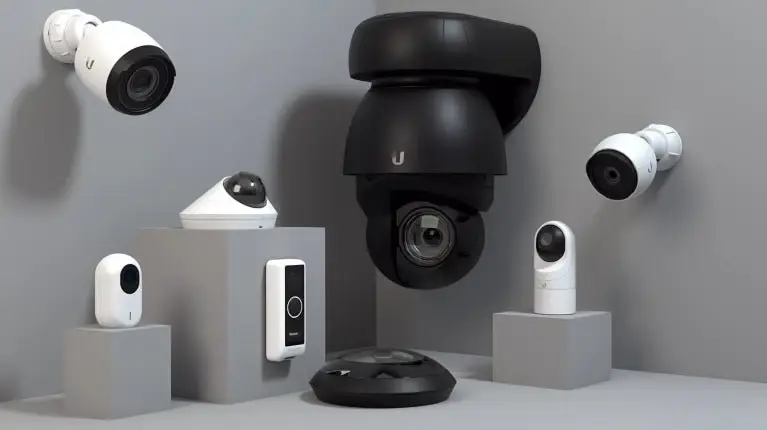
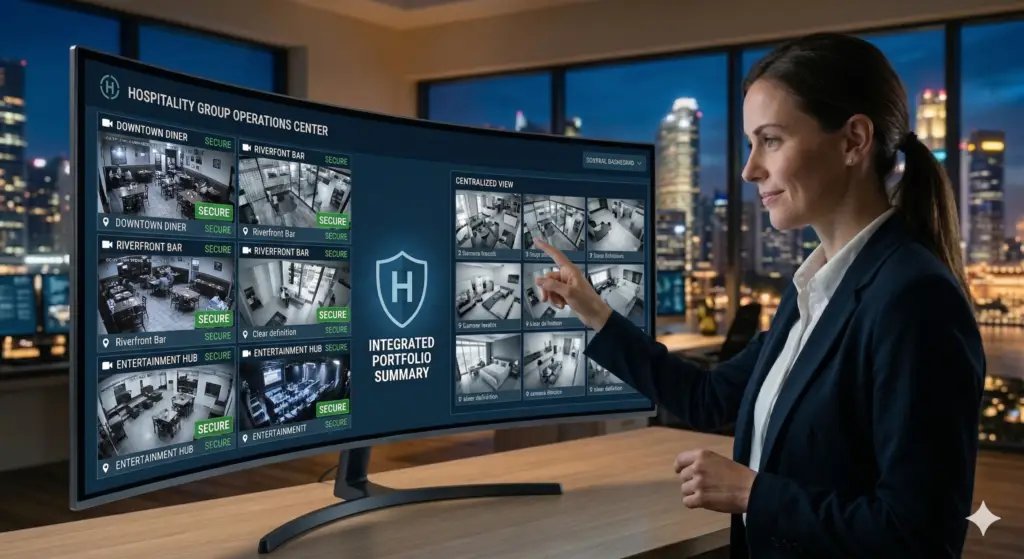
Physical Security & Camera Deployment We replaced aging analog cameras at six locations with high-resolution IP cameras (Verkada and UniFi Protect), all managed through a single centralized cloud console. Coverage was extended to every loading dock, cash handling area, and private event entrance. Management can now pull live or recorded footage from any device, at any location, within seconds — without calling a vendor or driving to the site.
Managed IT & 24/7 Monitoring We consolidated all nine locations under a single managed services agreement, covering 24/7 monitoring, proactive patch management, and a unified helpdesk for all staff. Previously, each location manager handled their own tech issues — calling different vendors, waiting days for someone to show up. Now there’s one number, one SLA, and most issues are resolved remotely before they touch service.
Triton Environmental Sensors At four of the group’s higher-volume venues, we deployed Triton sensors in restrooms and back-of-house areas to detect vaping and smoke — protecting the business from code violations and liability without cameras or audio recording. Real-time alerts go directly to management. No footage, no PII, no compliance concerns — just immediate awareness when something happens.

The Results
- Full PCI DSS-compliant VLAN segmentation deployed across all 9 locations
- Centralized live and recorded camera access via cloud console — footage retrievable in seconds
- Single managed IT agreement replaced 9 fragmented vendor relationships
- Back-of-house incidents now fully documented with usable footage for the first time
- Vaping detection active at 4 venues — zero health code violations since deployment
- Staff IT issues resolved same-day in 94% of cases, up from a 2–3 day average