
Structured cabling is the backbone of every modern office. When you’re building out a new space in New York City — or renovating an existing one — the decisions you make about your network infrastructure will affect your business for the next 10 to 15 years. Poor planning leads to patchy Wi-Fi, overloaded switches, and expensive re-pulls down the road. Done right, a structured cabling installation gives you a clean, scalable network foundation that supports everything from VoIP phones to IP cameras to cloud-hosted applications.
This guide is written for NYC business owners, operations managers, and IT teams who want to understand exactly what structured cabling involves — and what to look for when hiring a low-voltage contractor.
What Is Structured Cabling?
Structured cabling refers to the complete installation of physical network infrastructure inside a building: cables, patch panels, wall plates, cable trays, and the distribution points (IDF/MDF closets) that organize it all. Unlike point-to-point wiring — where individual cables run directly from device to device — structured cabling creates a standardized, tiered architecture that’s easier to troubleshoot, expand, and maintain.
The Main Components
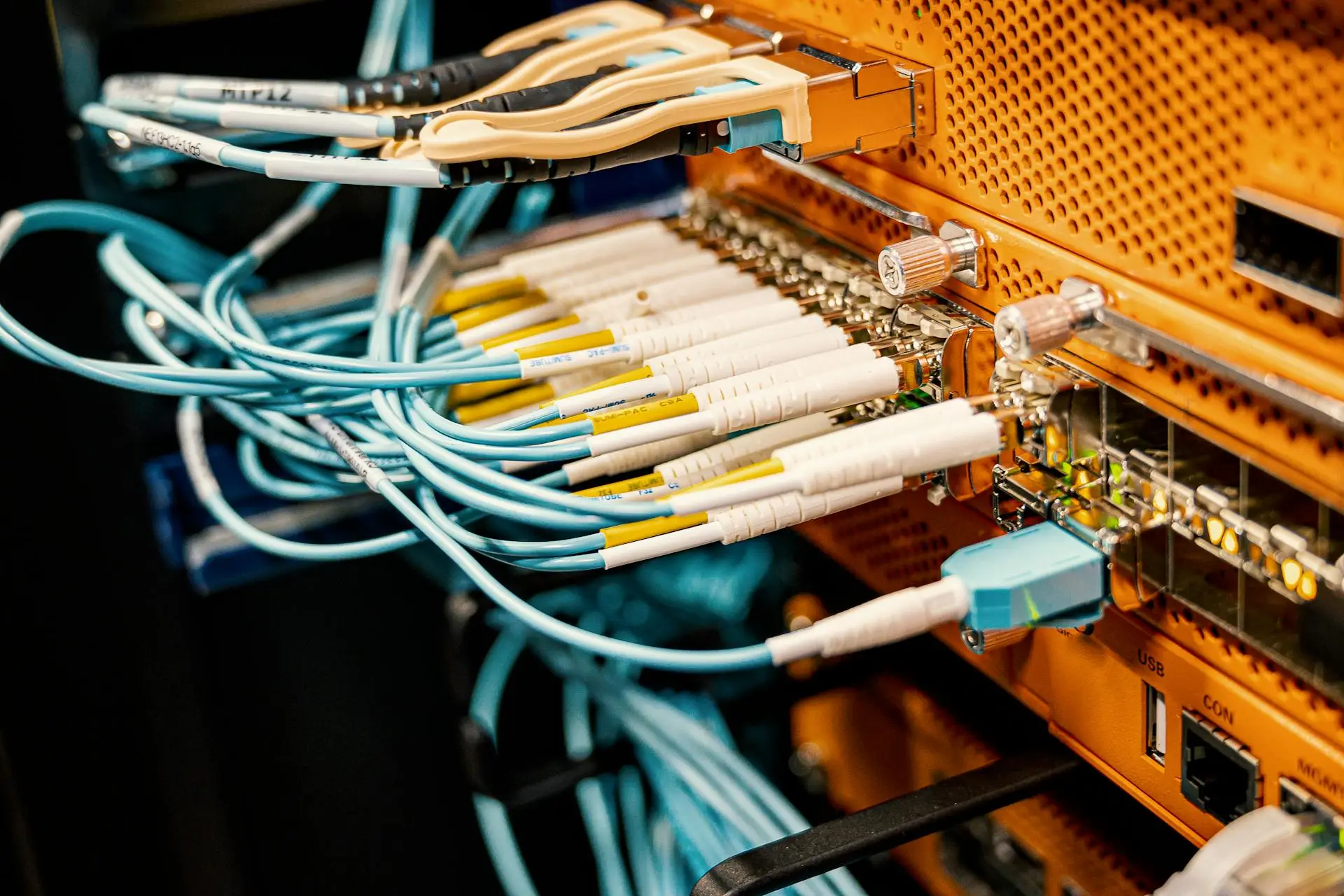
A properly installed structured cabling system includes six main subsystems: Entrance Facility (EF) where the building meets the external network; Main Distribution Area (MDF) housing core switches and patch panels; Intermediate Distribution Areas (IDFs) at floor-level distribution points; Horizontal Cabling from IDFs to individual workstations; Work Area Components including wall plates and keystones; and Backbone Cabling connecting MDF to IDFs, usually fiber.
Cat6 vs. Cat6A vs. Fiber
Most new commercial installations in New York City use Cat6A copper for horizontal runs. Cat6A supports 10-gigabit speeds up to 100 meters and performs better in environments with electrical interference. For backbone runs between floors, single-mode or multi-mode fiber is standard.
The Installation Process
- Site survey and design — Your contractor walks the space, identifies cable pathways, counts drop locations, and designs the IDF/MDF layout.
- Pathway installation — Cable trays, conduit, and J-hooks are installed to route cables.
- Cable pull — Cat6A is pulled from the IDF room to each drop location.
- Termination — Each cable is terminated at wall plates and patch panels.
- Testing and certification — Every run is tested with a Fluke cable certifier to verify it meets TIA-568 standards.
- Documentation — You receive a cable map showing every drop, patch panel port, and switch port assignment.
How Many Drops Do You Need?
A common rule: two data drops per workstation, plus additional drops for printers, conference room AV, access control readers, IP cameras, and wireless access points. Build in 20% overhead — adding drops after construction is always expensive.
Done right, structured cabling is invisible — it just works, for the next decade.
SolvedIT is a licensed low-voltage structured cabling contractor serving NYC, NJ, and CT businesses. We design, install, and certify Cat6, Cat6A, and fiber cabling systems for office buildouts, renovations, and expansions of all sizes.
If you’re planning a buildout or need to upgrade your existing infrastructure, contact us for a free assessment.
Related Articles: Cat6 vs Cat6A: Which Network Cabling Is Right for Your Business? · Signs Your Office Network Cabling Needs an Upgrade · Structured Cabling for Schools and Medical Offices in NJ and CT · Low Voltage Systems for NYC Businesses: Cabling, Cameras & Smart Sensors